Sports

News


Nothing came easy for Charley Casserly.

As a 26-year-old coach at Minnechaug High School, Casserly lost everything he owned in a house fire. He had just $500 in the bank, a car with 120,000 miles on it and various pieces of old furniture that he acquired from Goodwill and the Salvation Army.

"I didn't have a lot," Casserly said. "But I had enough."

After paying his own way through both high school and college, Casserly developed a strong work ethic at an early age. He picked up a variety of different jobs, selling newspapers and working at a local grocery store to pay tuition at Bergen Catholic High School. He held down three jobs during the summer to help pay for his education at Springfield College.

And at age 28, he finally caught a break.

Casserly was offered an unpaid internship with the Washington Redskins, where he worked directly with legendary coach George Allen.

"I had been in the working world for a long time," Casserly said. "But when I had the opportunity to go to the Redskins, I knew it was an opportunity of a lifetime."

Casserly originally planned on spending seven months as an intern before making a decision on his future. He spent much of that time in training camp with the team and on the road, unearthing unpolished talent as a scout.

"When you're in that position, you appreciate the opportunity more," Casserly said. “When it’s like sudden death, you understand how serious this is and decide that nobody is going to outwork you.”

After several months of sleeping on a couch and renting out a nightly space in the local YMCA for $8 a night, Casserly was hired as a scout in February 1978 and earned a salary of $17,000 per year.

Despite having barely enough money to live comfortably, Casserly handed over his first paycheck to the people who helped him the most. He listened to the advice of his little league football coach, the person who Casserly says had the biggest influence on his life as a young man.

“He made a comment,” Casserly said. “He said, ‘That’s not how things work. What you want to do is go help somebody else like I helped you.’ So I never forgot that.”

During his early years as a scout, he discovered free agents Joe Jacoby and Jeff Bostic, who were original members of the famed "Hogs" offensive line and key components of Washington's first two Super Bowl teams.

While working his way up the ladder with the Redskins, Casserly put his mentor’s words into action and helped restart the franchise's internship program that was discontinued shortly after he was hired.

"Obviously, I started as an intern with the Redskins," Casserly said. "We needed people to work but we just wanted to give young people a chance."

As a key piece to the program, Casserly has been able to help more than 30 people, including current New Orleans Saints’ defensive coordinator Steve Spagnuolo, move on to successful positions within college or professional sports.

During the NFL strike in 1987, Casserly was put in charge of assembling a team of replacement players, a task that is seemingly enshrined with the release of the 2000 Warner Bros. film The Replacements.

"You come to work everyday and your players are out there picketing, so you were torn," Casserly said. "But you have a job to do. You don't know how long this thing is going to last, so once you walked through the parking lot and into the building, you went to work."

Casserly and his team pulled players from Canada and called on four men from a halfway house to fill the Redskins' roster and lead the team to victories over the St. Louis Rams and the New York Giants before they faced off against their longtime arch rivals, the Dallas Cowboys.

The Redskins were the undisputed underdogs. Superstar players such as Tony Dorsett and Ed Lee “Too Tall” Jones had crossed the picket line and were supposed to defeat Washington handily.

But the Redskins shocked the world and defeated the Cowboys by a final score of 13-7.

"It was an exciting experience for all of us," Casserly said.

Shortly thereafter, Casserly was promoted to general manager. In what is perhaps one of the most impressive Draft Day moves in NFL history, Casserly acquired all of the New Orleans Saints 1999 selections, plus their first- and third-round picks in 2000 by swapping the Redskins' fifth selection in the first round for the Saints' 12th choice, all the while managing to obtain the player Washington wanted, future Pro Bowl cornerback Champ Bailey.

He continued the Redskins' history of uncovering high-quality players in the later rounds of the draft and selected Brian Mitchell (1990), Stephen Davis (1996) and Keenan McCardell (1991).

And, most impressively, Casserly played an integral role in assembling three of the Redskins' four Super Bowl-winning teams.

"Those were the greatest experiences," Casserly said. "That is the ultimate goal."

Casserly always knew that, at the end of his career as an NFL executive, he wanted to teach at the college level and do something on televison.

“Coaching is teaching,” Casserly said. “In fact, it’s the ultimate form of teaching. So I was around great teachers for my entire career in the NFL. The principles I see in coaching are the same principles I see in teaching.”

He has been able to fulfill both of those dreams, teaching Professional development in the School of Recreation, Health & Tourism while serving as an NFL Insider on The NFL Today on CBS.

“At this point in my life,” Casserly said, “I’m doing everything that I wanted to do.”


After a three-year absence from postseason play, the Patriots look to gain a boost next year from incoming freshman soccer recruit Julius Rosa-DiStefano. Rosa-DiStefano committed to George Mason University in August 2011 and has since been utilizing his experience as a two-sport athlete to prepare for the upcoming challenge of being a Division I college athlete.

“I’m really looking forward to playing in college,” Rosa-DiStefano said. “I look forward to playing with players who are better than me and getting better as a player. Hopefully, I will get to start and earn some playing time.”

Throughout high school and his earlier years, Rosa-DiStefano participated in both club soccer and basketball. During his high school career, Rosa-DiStefano played soccer for Southwestern Youth Association.

He also made the freshman, junior varsity and varsity basketball teams for Westfield High School in Chantilly. Rosa-DiStefano enjoys the diverse attributes that the two sports add to his overall athleticism.

“Playing basketball and soccer helps me since they both bring something different,”Rosa-DiStefano said. “Soccer helps with my endurance and speed, as basketball works with my jumping and athleticism.”

Courting Rosa-DiStefano was not an easy task for Mason. Rosa-DiStefano was aggressively recruited by many Division I schools for his soccer skills.

Over the course of the recruiting period, Rosa-DiStefano was contacted by schools such as University of Richmond, University of Massachusetts, Mary Washington and University of North Carolina. Mercer University also contacted Rosa-DiStefano due to his talents on the basketball court.

Despite the interest other schools showed, Rosa-DiStefano was enamored with the Patriots program from the start.

“Mason was really appealing to me first of all because of the soccer program,” Rosa-DiStefano said. “I liked the coaches and the style of play. I like the campus and the size of the school, and one thing that really drew me in was the diversity.”

While some Division I college soccer players are discovered competing with their high school team, Rosa-DiStefano’s high-profile club team allowed him to be recognized and scouted in a different setting. While the team is based in Clifton and Centreville, the squad reaches out to a wide demographic in order to develop the best team possible.

The program is currently ranked 130th in the nation and 11th in the state of Virginia.

The program’s busy schedule of league games and tournaments brought  Rosa-DiStefano to the attention of scouts.

But the time-consuming nature of the soccer program, combined with a desire to continue playing basketball, left Rosa-DiStefano with a difficult choice to make.

“Originally, I was leaning toward playing more basketball. I was going to play AAU basketball my sophomore and junior year, but that ended up running into soccer season,” Rosa-DiStefano said. “So it really got complicated, but I ended up deciding on soccer this year.”

After committing to play soccer at Mason last summer, Rosa-DiStefano continued to play basketball at the high school level. He made the varsity team for the second year in a row and was part of a successful senior year campaign that earned the Bulldogs the Northern Region Championship and a trip to the Virginia State Championship tournament.

“Each sport helped out with each other in a way. I had to learn to balance my time more,” Rosa-DiStefano said. Despite Rosa-DiStefano’s colorful and storied high school career in soccer and basketball, the incoming freshman is not in the habit of living in the past.

Rather, Rosa-DiStefano is already looking forward to the next chapter in his life and readying himself to make an impact on the new program anxiously awaiting his arrival. He is also anticipating the new experiences college life will bring.

“I’m looking forward to playing,” Rosa-DiStefano said. “I think I can bring some speed and goal-scoring to the team. I am also looking forward to living on my own and experiencing the college life while taking different courses. Hopefully, I can become a leader later in my time at George Mason,”


It is not our culture or our society that is the issue. Ironically enough, it is the ruthless and reckless regard of journalists today. It is an unfortunate reality that “got ya” journalists, the men and women across the nation who devote their time and efforts to bringing down public individuals, are widely recognized for their work. It’s a shame that honest journalists can seemingly not exist in a world that enjoins ever greater dirt digging and mud slinging.But that is what journalism has become.The role the media plays throughout this nation is incredible. Take, for instance, the Trayvon Martin-George Zimmerman controversy in Florida and think about the impact of the pictures that have surfaced – an outdated picture of an innocent-appearing Martin sitting side-by-side with a prison mug shot of Zimmerman.At what point did it become okay to crucify someone in  public, abusing the power of the media to destroy the reputation of someone who does not have the platform to print a newspaper, air a radio or television show or communicate his or her words on a widely renowned platform?But it is not the power that is troubling. It is the lack of responsibility displayed by members of the media that, in turn, has transformed the world of sports into one dominated by the opinion of media outlets. We have turned into a society that puts so much heat on professional and collegiate sports owners and directors to rid their programs of people who partake in shockingly popular extracurricular activities.Arkansas football coach Bobby Petrino was dismissed from the Razorbacks’ program for intentionally misleading athletic director Jeff Long about the secret relationship Petrino had with 25-year-old Jessica Dorrell, his mistress who was present during a motorcycle accident Petrino was involved in on April 1.Almost immediately, the news surrounding Petrino’s accident and his affair surfaced and the public was left to form an adverse opinion based on incomplete information. A disgraced coach left to pick up the pieces of his marriage and physically heal from the effects of the accident, all the while releasing statements to the public through pushy members of the media.Under such circumstances, it is the public that has been conditioned to demand answers. It is the public that has been conditioned to follow the sticky stories of the week. But despite his status and despite his brainless behavior, Bobby Petrino does not owe you, me or anyone else in the public a damn thing.He doesn’t owe you answers about his personal life or about why he cheated on his wife any more than I owe you an answer for why I organize my pencil drawer to reflect their value. It is not any of your business.While I respect the mandate of the media to be watchdogs and to hold people accountable for actions that affect our society, I refuse to accept the media world as a platform that abuses its power to leak personal information and personal issues that affect the livelihood of a human being.Bobby Petrino is just the latest victim to the brutal world. Tomorrow it could be you or me.At what point do we decide enough is enough?


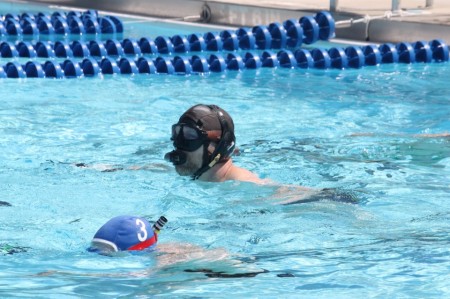
George Mason University’s senior swimmers and divers are cleaning out their lockers and reminiscing about their Mason athletic careers as their final year comes to a close.

Diver Derrick Butts remembers both his darkest and brightest moments.

Butts’ brightest moment this year outshined those of some of the most talented athletes at Mason.

Butts became the first Mason men’s diver to make it to the NCAA championships, marking his place in Mason’s diving history. In the 3-meter dive, Butts placed 23rd in the preliminaries and ranked 29th overall. He was also named the 2012 CAA Men’s Diver of the Year.

Butts’ road to the NCAA Championships had a few roadblocks. Leading up to his senior year, coach Roland McDonald left to coach at San Diego State University, leaving Butts feeling lost and confused.

“Our coach of two years just up and left. I was pretty crushed at this point,” Butts said. “I thought I would have to start all over. I thought about quitting because I had come so far. I thought about transferring schools.”

Butts had been diving too long to give up so easily. Originally beginning as a swimmer for a community swim team, Butts found more excitement in diving.

“I was on a summer league swim team, and I was not very good,” Butts said. “I lost every race that I had ever been in and one day I happened to look over to the other end of the pool and see some of the divers doing crazy things off the board.”

“At the end of that summer I told my mother that I no longer wanted to swim and that I wanted to take up diving,” Butts said.

Continuing to dive throughout high school, Butts was recruited by Mason as well as the University of Delaware.

Choosing to attend Mason, Butts’ diving career started off in the right direction. During his freshman year, he placed third in the men’s 1-meter dive and fourth in the men’s 3-meter dive at the CAA Championships. He was also named CAA Men’s Diver of the Week during his freshman and sophomore years.

He continually improved in the 1-meter and 3-meter at the CAAs, but he was not meeting his ultimate goal of competing at the NCAAs.

Shaken by the departure of the diving coach he had become accustomed to, Butts was unsure of his future.

After McDonald left, Dennis Ceppa stepped in, taking over as assistant diving coach for Mason.

Ceppa’s  history of leading divers to success resultedg in him being named Metro Atlantic Athletic Conference Diving Coach of the Year five times.

“I was lucky enough to join the program just in time to watch Derrick grow and become a responsible young adult,” Ceppa said.

Butts’ growth as a diver was not immediate. While Butts was already an accomplished diver, Ceppa saw what improvements needed to be made to take him to the next level.

“It was easy to see from the first day I stepped on deck to coach here at Mason that Derrick was an extremely talented athlete,” Ceppa said. “But he was missing refined technique and the discipline to help him remain persistent enough to change.”

This persistence allowed Butts to make it to the NCAAs, but Ceppa’s encouragement is what pushed him to change and improve.

“He always believed in me from the moment he got to the school and motivated me the whole time,” Butts said. “He yelled when I needed to be yelled at and praised me when I needed to be praised.”

Having made the USA diving nationals four times in a row, Butts plans to train hard for the Zone Championships this summer with Ceppa by his side.

“I am proud to call him a friend and wish him nothing but the best as he continues on to the next stage of his life,” Ceppa said.

Where will Butts go from there?

“I am looking to become a juvenile probation officer in the area. And if my career takes off how I want it to, then I will no longer be able to dive full time, but I will definitely be diving in my free time,“ Butts said.


Any time there is enthusiasm for a new sport, a tournament is held in the spring to gauge student interest. If there is enough commitment, then the sport becomes a league in the fall.

“There’s definitely some interest here some of the teams are not organized, but both dodgeball and ultimate frisbee will become intramural leagues in the fall,” said Paul Bazzano, intramural and recreational sports assistant director.

by Stephen Kline

Sports management majors are required to have a directed practicum experience, either paid or volunteer.

Over the course of 10 to 15 weeks, the students are expected to provide opportunities for others to gain skill and knowledge in an entry-level sport.

Seven teams signed up for the ultimate frisbee tournament, but only four showed up and were able to compete.

Matt Florence, a health, fitness and recreation resources major who organized the ultimate frisbee tournament under the practicum experience program, reached out to the ultimate frisbee club team for support.

“I played many other sports with very intense rivalries. Ultimate frisbee has a sense of community-building and fun like no other sport I’ve ever played,” said Tim Rusbasan, a senior and captain of the men’s club ultimate frisbee team. “It’s about sportsmanship. You call all your own fouls.”

Registration is open now through April 18 for intramural battleship.

The object of the game is to sink the opposing team’s boats by tossing buckets of water on board while trying to protect your own boat from going under.

The team on the last boat still floating wins the game.

by Stephen Kline

“We played last semester for the intramural staff. They loved it and have been talking trash and waiting for the next round ever since,” Bazzano said.

The games will be held in the Aquatic and Fitness Center’s recreational pool on April 21.

To register, teams need at least four players with at least one female in the boat at all times.

Roster maximum is five.

Register online and view the rules and a promotional video at http://recreation.gmu.edu.


/
Apr. 9, 2012

Freshman Orientation


Being a college freshman is a new, unusual and stressful time for a majority of students.

Living with a roommate, maintaining a full course load and constantly attempting to find a place in the college environment can push students to the limit.

Throw in hours of practice every day, 7 a.m. workouts and the constant pressure of trying to prove yourself on the golf course to that mix and it makes for a whirlwind of day-to-day tension and mental unrest.

However, freshman Andrew Brenneman handles the same docket of activities while maintaining a dignified poise and clear mindset.

“Being on the golf team does take up a lot of my time. On top of classes, I practice about three or four hours a day, sometimes even more than that. I don’t see it as any extra stress because I enjoy what I’m doing, and I like playing golf. It’s actually a nice break from the day,” Brenneman said.

Of the golf team’s 11 members, Brenneman is currently one of only two freshman on the entire squad.

Being on a team consisting of mainly upperclassmen has pushed Brenneman to test himself against the veterans and their experience

“For the first semester I had to deal with being the youngest, but over winter break we added another freshman to the team. In the earlier part of the year I felt more inclined to prove myself to the older guys. In general, I try to prove myself as just a member of the team,” said Brenneman.

Making the leap to the collegiate level of competition in any sport is a difficult change that requires a degree of patience and several adjustments.

Brenneman realizes the difficulties but has managed to find a lighter side to adapting to the higher level.

“The college level is very different from what I saw when I was younger,” Brenneman said. The players are a lot better and it takes more time and effort. But it is also fun to see some of the guys I played against in high school and when I was in junior golf. To play against them is a fun part of it all.”

Off the course, Brenneman has realized the values and benefits that being a college athlete have brought to him.

He maintains a positive mindset about being involved in a sport and handling the extra workload.

“I have definitely learned how to manage my time better. Even though it takes up a lot of time, I enjoy playing the game because it keeps me busy, and I always have fun doing it,” Brenneman said.


/
Apr. 2, 2012

Women’s Rowing


A change to the 2013 NCAA rules will give the Mason women’s rowing team an advantage when it comes to the selection process for the championship tournament.

Like basketball, the selection of the top 16 teams to vie for the championship will no longer be determined solely by the committees.

Next year, conference champions will automatically secure a spot in the championships.

“The new rules will really help us on the recruiting front,” said head coach Geoff Dillard, who has been with the team for seven years. “If we get the right people here, we can have the chance to go to NCAA championships. Our goal this year is to be in the top three teams for the CAA. It’s an attainable and achievable goal, and would be a major success for us.”

The team rows home races, also known as regattas, at the Occoquan reservoir and occasionally travels to compete on the Potomac and in Philadelphia.

Regattas are scored similar to a swimming or track meet. Individual boats are given weighted scores based on their ranking.

Each boat, or shell, seats eight rowers. The added point total of the boats determines the team score.

“We can have one boat be really successful in a regatta, but if the other two boats aren’t, then we probably won’t go to the NCAA. It’s the same way with the championship,” Dillard said.

During Welcome Week, the team attempts to recruit walk-ons for their novice team to train and, eventually, compete on the official team. The majority of athletes on the official team are walk-ons with no scholarship incentive.

“The girls on our team, they’re doing it for the right reasons,” Dillard said. “Most of the girls are not on scholarship, they’re doing it because they love to do it, because they’re motivated and want to be successful.”

Dillard cites the team’s limited resources for scholarships a weakness in their conference.

“We don’t use it as an excuse, we just work harder,” Dillard said.

The typical rower is tall and athletic. The longer your arms are, the longer your oar and stroke is.

However, natural build is not the only characteristic of a successful rower.

“We’re a racing sport. The bottom line is that the biggest thing we’re looking for is a competitive spirit,” Dillard said.

Many rowers, including Dillard and assistant coach Laura Mikels, don’t pick up the sport until college.

“Rowing is unique in that it gives college students a chance to try a sport for the first time and be successful at it,” Dillard said. “Once you learn the basic motion and how to repeat it, your success comes down to your work ethic.”

There are many misconceptions about rowing as a sport, which Dillard says most rowers find amusing.

“It’s common that people don’t know much about our sport,” Dillard said. “We’re not insulted.”

A usual misconception about rowing is that it is primarily an arm sport.

While the rowers look like they generate power from their upper bodies, 85 percent of the power actually comes from the legs.

“One common thing that we see is people who get on the rowing machine in the gym and do it all wrong,” said Dillard.

The machine, called an erg, helps rowers perfect their form and strengthen key leg muscles.

At the CAA Championships on April 29, Dillard and his team will christen a new boat in honor of President Alan Merten and his wife, Sally.

“Having a boat named after you is the highest honor in the rowing world,” Dillard said. “And we’d like to honor the Mertens for supporting our program.”


We wonder about it every autumn Saturday afternoon. It is a question we all want answered. We are all dying to know. Why does George Mason University not have an NCAA Division I football team?

“Football must fit strategically within the vision of the university,” said Tom O’Connor, director of athletics and assistant vice president at Mason.

For years, the university has wrestled with the desire to start a football program.

For years, most of the factors informing the decision of whether or not to start a team can be attributed to cost. That remains the case today, and as the landscape of college athletics continues to change, so do those costs.

“Cost is the biggest issue,” O’Connor said. “It is very costly to be successful in a spectator sport like football.”

The university’s 2010 estimate of the potential expenses associated with a football program included operating costs, the cost of additional women’s sports programs, potential conference movement and the cost of a stadium.


Where Do We Play?


If Mason does decide to start a football program, the greatest cost factor will arise from the conference and division the team would play in.

Division I college football is split up into two subdivisions: the Football Championship Subdivision, formerly known as Division I-AA, and the Football Bowl Subdivision, formerly known as Division I-A, which is the top level of college football.

If the team were to play in the FCS, it would presumably join the CAA, which is where all of the other Mason sports compete.

But if Mason were to immediately jump into the FBS, it would have to move into a larger conference, such as the Big East.

There is a dramatic difference in the costs of playing in the FCS and FBS.

According to the 2010 estimate, the total annual costs that the university would incur playing in the FCS was estimated at $12,367,167 versus $30,048,700 playing in the FBS.


Title IX and Gender Equity

If Mason adds a football program in either division, the university would have to either cut an existing men’s team or add more women’s teams to be in compliance with Title IX.

The university would elect to add women’s field hockey and golf.

The university would also have to add scholarships to existing women’s programs.

The additional costs of the new and existing women’s programs were included in the total annual costs estimate.


Stadium


Construction costs for a football program’s facilities and stadium must also be considered. George Mason Stadium cannot accommodate a Division I football game.

The university would have to build a new stadium and additional facilities.

“We would do it like we do everything else at this university, and that is first class,” O’Connor said.

The size, design and cost of a new stadium would be heavily dependent on which league the team chooses to play in.

In order to accommodate an FCS football program, the university would require 25 to 35 acres of land for a 15,000-seat stadium, with parking and additional facilities that would cost approximately $64 million.

For an FBS program, Mason would build a 40,000-seat stadium with parking and facilities on 45 to 55 acres of land at a cost of approximately $170 million.

During past considerations of a football program, the university marked the Recreation and Athletic Complex (RAC) and West campus as potential locations for a stadium.

Today, no potential locations have been decided on.


Rumors Surrounding football


A number of rumors have arisen with all of the speculation surrounding a Patriot football program.

One rumor has it that concerns about tailgating were a primary reason for not starting a program.

“Tailgating is not much of a problem or concern. It’s something you manage,” O’Connor said. “We’ve done a pretty good job managing it with Homecoming basketball games.”

Another rumor that has circulated around campus is that the Washington Redskins offered to help finance the construction of a stadium, provided that they would be able to use it to host their off-season training camp.

According to O’Connor, those rumors are completely false.

He added that the Redskins only inquired about using the current Mason facilities for their training camp, but the team decided against it because of limited space.

Benefits of Football


Although football is a costly endeavor, the addition of a program could benefit Mason immensely.

A football program could raise school spirit, as well as build a stronger sense of community on- and off-campus.

A football program would provide students a richer college experience and also encourage alumni to return to the university.

A Division I football team would garner greater media attention, which would raise the profile of the university as well as its other athletic programs. The attractiveness of a football program would also have a positive impact on enrollment.

“I would love to have a football team for all those reasons,” O’Connor said.

O’Connor added that the decision could not be based on emotional factors.

“I have an obligation to do what’s best for the university. It cannot be an emotional decision,” he said.


Potential for the Future


Football is not in Mason’s plans for the near future. According to O’Connor, football must fit into the serious priorities of the university.

The process of gaining approval to start a program requires the administration to submit a proposal to the university Board of Visitors, which would vote for or against it.

The BOV has voted against a football program in the past.

Football is a sport that requires a variety of components to be successful and all of those components would have to be in place in order for the university to sign off on a team.

“If we do it, we have to do it right,” O’Connor said.

Asked if the university fears the risk of failure, O’Connor said, “We wouldn’t go into it with that mindset. We would have to be successful.”

Incoming university president Angel Cabrera recently said that he would support the acquisition of a football team if the university is able to afford it.

Of course, financing such a program is no simple task and would require aggressive fundraising, outside donations and additional student fees.

The university estimated in 2010 that student fees required to help fund a football program would amount to $515 per student for an FCS program and $1,252 for an FBS program.

If the administration were to submit a formal proposal to the BOV, it would first have to conduct a feasibility report that would explore both the potential costs and revenues of a football program.

The university has yet to conduct a study on revenue potential, but one thing to note is that there are very few Division I FBS athletic programs that actually turn a profit.

According to a 2010 NCAA report, only 14 of the 120 schools competing in the FBS profited from their athletics programs.

O’Connor said it would take four to four and half years from the BOV’s approval of a football program before the school would see a team on the field.

The school would need time to find coaches, fundraise, recruit and build necessary facilities.

Whether or not an NCAA Division I football team is in Mason’s future remains to be seen.

But it is clear that such a program would be a costly endeavor, and if it were to happen, the university would go all in with the intention of being the best.


In eighth grade, Mendbagana Tovuujav was a skinny kid living in Mongolia.

After a scuffle with some local gang members, Tovuujav was approached by two-time world freestyle wrestling finalist Naranbaatar Bayaraa. 

“He told me that if I thought I was tough, I should come wrestle with him instead of waste my time with street kids,” Tovuujav said.

The experience changed the eighth grader’s life. After training with the Mongolian wrestling team, Tovuujav was offered a full scholarship to an American prep school.

From there, he received a full scholarship to George Mason University.

Tovuujav, who’s now a senior, has been a nearly unstoppable force on the Mason wrestling team.

This year he finished the regular season with a 20-3 record and went on to the NCAA Division I nationals in St. Louis, where he lost.

Tovuujav plans to move back to Mongolia after he graduates in May and try out for the 2016 Mongolian Olympic wrestling team.

“Wrestling is an individual sport,” Tovuujav said. “If everyone works hard, then the team does well. I focus on improving myself.”

When new coaches Joe Russell and Tommy Owen came on for the 2012 season, the team was told that it was hard to restart with new leadership.

“Coach Russ and Owen are very positive people; they always support us no matter what,” Tovuujav said. “We trained hard and focused on building team unity, which really helped us this season.”

Since the beginning of his wr­­estling career when he was in eighth grade, Tovuujav has been wildly successful.

He took third place in the Mongolian High School Nationals before he was even enrolled in high school. He was soon approached by the Mongolian Olympic coach.

The Olympic coach made a deal with St. Benedict’s Prep, a private school in New Jersey, to send one Mongolian wrestler to live and study at the school each year.

Tovuujav was the third Mongolian student to go to St. Benedict’s where he wrestled for three years.

His mother was reluctant to send the youngest of her five children off to America, but the decision was ultimately his.

While at St. Benedict’s, Tovuujav roomed with Samardo Samuels, who now is a power forward and center for the Cleveland Cavaliers.

“We lived in the dormitories at school with other international students and kids who had bad grades,” Tovuujav said. “It was hard to adjust. Mongolia is very different culturally — different for everything really.”

When he arrived in America at 15, Tovuujav spoke no English.

He still struggles with the language, but he has managed to succeed academically and will graduate this spring.

Though three of Tovuujav’s brothers and his father were all wrestlers on the Mongolian National team, no one thought he would end up wrestling himself. He credits his success on the mat to his work ethic.

“I work harder than anyone else. I train every day at practice and work on my mistakes and try to improve,” Tovuujav said. “I spend weeks working on one thing until it’s perfect, not everything at once.”

Tovuujav was trained as a freestyle wrestler during his early years with the Mongolian National team.

“Freestyle wrestling is more professional. It’s what’s used in the Olympics and around the world. American wrestlers use focus style, which is something new I had to learn,” Tovuujav said.

Freestyle or focus, Tovuujav’s style has always been offensive. However, after a broken elbow, hurt knees and a shoulder injury his junior year, he had to adapt his style.

“I had to stand back and watch and work defensively off of others’ mistakes,” Tovuujav said. “It was a big change to make in one year, and it was really hard for me.”

His knowledge of both styles of wrestling, along with his perspective as both an offensive and defensive wrestlerb has been an asset to the Mason wrestling team.

“He brought a different aspect of wrestling from being trained overseas,” said Frankie McLaughlin IV, a senior on the wrestling team.  “Being versed in all styles and positions has helped the team grow.”

Tovuujav has high hopes for the future of the Mason wrestling program.

“I believe they’re going to do great the next couple years,” said Tovuujav. “The team is young, and they’ll end up being really successful.”


There’s an ongoing epidemic across all levels of baseball.

Pitchers are more frequently in need of labrum surgery or, the most prominent of all, Tommy John surgery.

Mason’s baseball team has unfortunately had to deal with such injuries during pitching coach Steve Hay’s three-year tenure.

“One has been the fluke, one-pitch incident where it just happened late in the season. We have had some others where some pitchers have come into the program tired or hurt which may have caused the injury,” Hay said. “Most of the time there is a deficiency in the muscles in the shoulder or an issue with posture which we are currently doing a study on.”

Tommy John surgery is also known as ulnar collateral ligament reconstruction. The procedure got it’s name from former Dodgers pitcher Tommy John who was the first to undergo the operation in 1974.

When the ulnar collateral ligament in the elbow tears and a tendon from another place in the body is used to replace the damaged ligament.

The usual timetable for a return from Tommy John surgery for a player is anywhere from 12 to 18 months.

In recent times there seems to be a high rate of pitchers returning successfully from Tommy John surgery, the most successful case being John Smoltz of the Atlanta Braves, who won the National League Rolaids Relief Man of the Year in 2001, the year following his Tommy John surgery.

The blame for such injuries occurring across all levels of baseball is being put on coaches and managers, who are accused of overworking and overusing their pitchers.

Still, the fact remains that a pitcher motion is unnatural and puts a great degree of stress on the elbow.

Coaches are being accused of overworking and overusing their pitchers. It is not uncommon among major NCAA baseball programs to use their ace pitchers deep into starts, sometimes accruing 120 to 130 pitches.

A case recently came up in the past year’s MLB 2011 First-Year Player Draft in which Trevor Bauer, the 2011 Golden Spikes winner, was averaging 125 pitches per outing for UCLA.

Although Bauer has yet to run into any significant arm troubles, ESPN analyst Keith Law wrote of a 129-pitch outing by Bauer in March 2011, “...that’s an irresponsibly high pitch count for a 21-year-old, and no, no one will bother to question the coach who left Bauer out there to do it.”

Hay has a different philosophy than Law’s when he explained how he manages Mason’s staff workload.

“Pitch counts to an extent are being overanalyzed in baseball lately,” Hay said. “While there should be limits at the little league and high school levels, the college pitcher has fully matured and all pitchers are different. Some pitchers’ limit is 80 while another is 120.”

“It is our belief that it is more difficult and taxing to throw 80 pitches through four innings, than 115 though 8,” Hay said. “The more base runners in scoring position against the pitcher, the tougher the toll it is mentally and physically.”

“You would love to think that winning one game doesn’t cloud your judgment, but we try and do what’s in the best interest of the pitcher,” Hay said.

Although no one can give a definitive answer to why some pitchers must go under the knife for the various arm injuries, Hay believes Mason is being proactive in researching the root of the problem.

“We are currently doing a study using the Mason Research Department and training staff, trying to find out if there is a way to see the potential for injuries before they occur,” Hay said.

“If we can see the warning signs before the injury, then that is where I think we can separate ourselves from other programs.”

Hay’s philosophy for Mason is simple.

“We truly believe we are doing everything in our power to keep our pitchers healthy, and no one game is worth the risk or injury to a potentially professional player.”